Updated:
Quick answer: the best movers in Nairobi are the ones who survey your home before quoting, give you a written itemised price, carry Goods in Transit insurance, use their own trained crew and closed trucks, and have a strong record of recent Google reviews. A 1-bedroom move within Nairobi typically costs KES 18,000 to 25,000 with a professional company. This guide explains how to check each of those things, what to ask, the red flags to avoid, and how to plan your moving week.
We have run more than 1,000 home and office moves across Nairobi since 2019, so this guide is based on what we see go right and wrong every month, from bedsitters in Kasarani to family homes in Karen.
How much does a typical move in Nairobi cost? (2026)
Moving prices in Nairobi depend on how much you are moving (which sets the truck size), how many packers are needed, the distance, and access at both ends. These are typical ranges for a professional move within Nairobi with packing materials included:
| Home or office size | Typical price (KES) | Usual truck |
|---|---|---|
| Bedsitter / studio | 12,000 – 18,000 | 2-tonne pick-up |
| 1 bedroom | 18,000 – 25,000 | 3-tonne closed truck |
| 2 bedroom | 28,000 – 45,000 | 4 to 5-tonne truck |
| 3+ bedroom / maisonette | 50,000 and above | One or more 5-tonne trucks |
| Office | Quoted after a site survey | Depends on workstations and equipment |
Prices go up for long carries, upper floors without a lift, fragile or high-value items, and end-of-month dates. Moving between the 5th and the 20th of the month is usually cheaper and easier to book. For a full breakdown of prices and ways to save, see our moving cost guide. Treat a quote far below these ranges with caution: it often leaves out packing materials, insurance or enough crew, and the cost of a broken wardrobe or TV is higher than the saving.
8 things to check before you hire movers in Nairobi
1. A survey before the quote
A serious mover looks at what you are moving, in person or by video call, before giving a price. That is how they choose the right truck, crew size and materials. A price given over the phone without seeing anything usually changes on moving day.
2. A written, itemised quote
Ask for the quote in writing, broken down into labour, truck, packing materials, dismantling and any extras. You should know exactly what is included and what would cost more.
3. Registration and accountability
Check that you are dealing with a registered company, not an individual with a borrowed truck. A registered business has a name, an office and a phone number you can hold to account if something goes wrong. Our article on moving company regulations in Kenya explains what to look for.
4. Goods in Transit insurance
Ask whether the company carries Goods in Transit (GIT) insurance and what its maximum liability per move is. If something is damaged or lost on the road, this is what protects you.
5. A trained, permanent crew
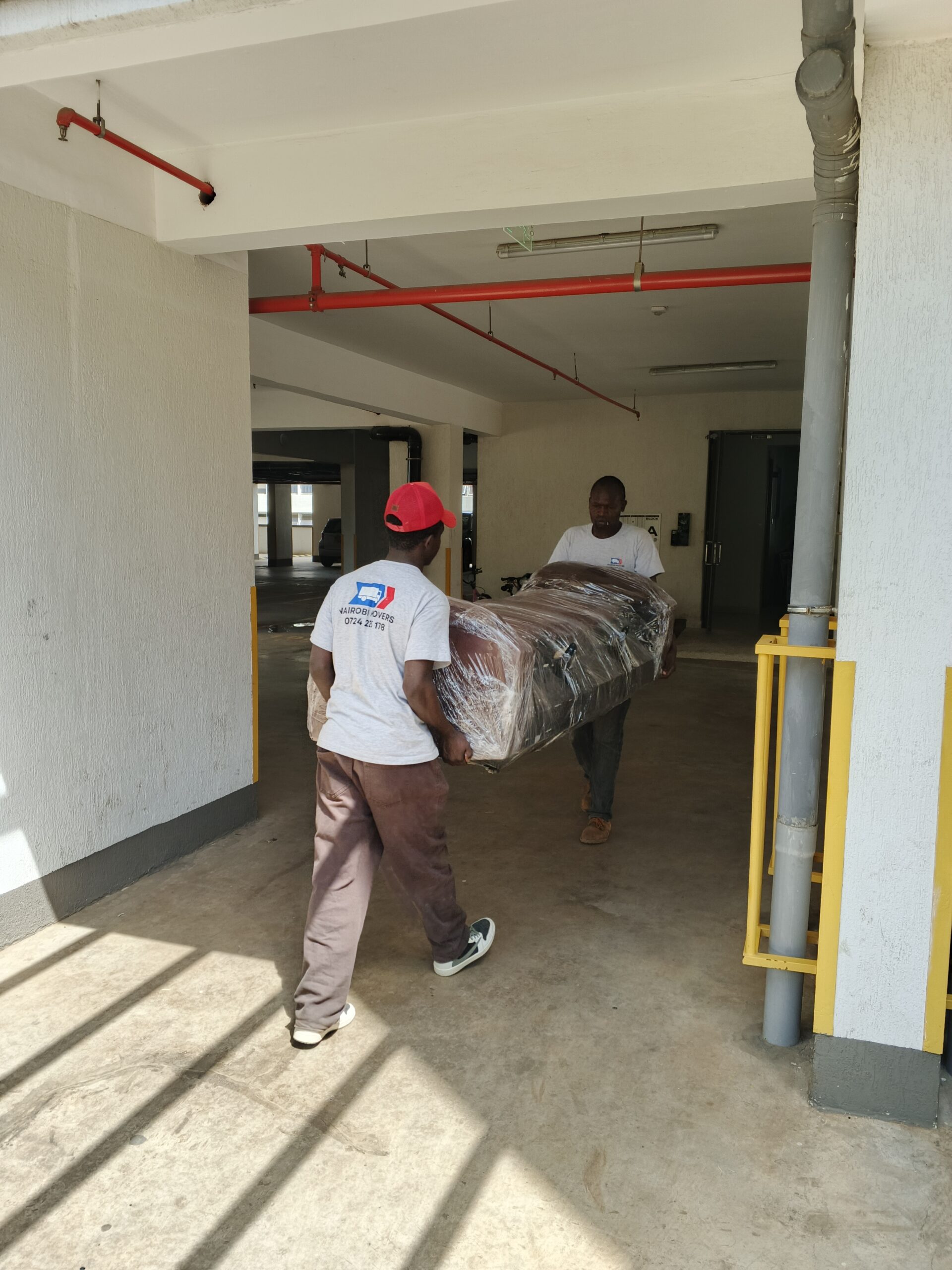
Ask whether the people coming are the company’s own trained staff or casual labour hired for the day. Trained crews know how to dismantle beds and wardrobes without damage, wrap furniture properly and load a truck so nothing shifts.
6. Proper equipment and materials
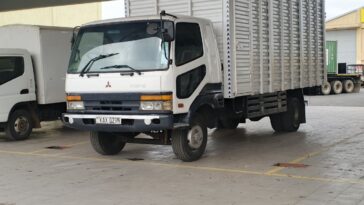
Good movers arrive with plastic crates or proper boxes, stretch film for sofas and mattresses, bubble wrap for glass and screens, moving blankets, straps and tools. In Nairobi’s dust and rain, closed box trucks matter: open trucks under a tarpaulin are a common cause of wet mattresses and damaged electronics.
7. Reviews from real, recent customers
Read the company’s Google reviews and look for patterns: punctuality, care with items, how problems were handled. A high rating from many recent reviews is a better sign than a handful of perfect ones. Personal referrals from friends and colleagues who moved recently are just as valuable.
8. Local knowledge and extra services
A Nairobi mover should know estate rules, traffic patterns and which roads a large truck can use. Check whether they also offer what you might need beyond transport: packing and unpacking, furniture assembly, storage if your new place is not ready, or international moving if you are leaving Kenya.
Questions to ask a moving company
- Will you survey my home before giving a final price?
- What exactly is included in the quote, and what would cost extra?
- Do you provide packing materials, or do I need to buy them?
- Are your crew permanent staff? How many people will come?
- Do you have Goods in Transit insurance, and what is the limit?
- What truck will you use, and is it closed?
- Will you dismantle and reassemble beds, wardrobes and desks?
- Who is my contact person on moving day?
- What happens if something is damaged?
Red flags to avoid
- No physical address or company name, only a mobile number
- A price given without seeing your items, or a quote far below others
- Large cash deposits demanded upfront
- No written quote or agreement
- Open trucks for household goods during the rains
- Vague answers about insurance, crew or what is included
- No reviews, or reviews that all appeared within a few days
What professional movers do on a typical move
- Survey and quote. The mover assesses your items, access and special requirements, then sends an itemised price.
- Moving plan. Date, start time, crew size, truck and any estate or building permissions are agreed in advance.
- Packing and labelling. Items are wrapped and packed room by room, and boxes are labelled so unpacking is quick.
- Dismantling. Beds, wardrobes, dining tables and desks are taken apart with the right tools.
- Loading and transport. Heavy items go in first and everything is strapped so nothing moves in transit.
- Unloading and setup. Furniture is reassembled and placed where you want it, and boxes go to the right rooms.
- Final check. A walk-through of both homes to make sure nothing is left behind.
Full-service, partial or DIY: which do you need?
| Option | What you get | Best for |
|---|---|---|
| Full service | Packing, dismantling, transport, unpacking and setup | Families, busy professionals, fragile or valuable items |
| Partial service | You pack boxes, movers handle furniture, loading and transport | Smaller homes on a tighter budget |
| Truck and crew only | Truck, driver and loaders, you do the rest | Single items, students, short local moves |
Whatever the size, one company should be able to handle it, from a single fridge or sofa to a five-bedroom home. See our house moving, office moving and corporate relocation services for details of each.
Moving by neighbourhood: what to know
- Kilimani and Lavington: many apartment blocks do not allow moving after 6 pm, so start by 8 am.
- Runda and Muthaiga: estate security often needs the truck registration and crew details at least 24 hours ahead.
- Parklands and Westlands: parking for a large truck can be tight. A pre-move visit shows whether a smaller shuttle vehicle is needed.
- Syokimau and Kitengela: expect dust, so every item should be wrapped even in a closed truck.
Moving during the long rains (March to May) or short rains (October to December)? Insist on a closed truck and plastic crates, and read our rainy season moving tips.
Your 7-day moving checklist
7 days before
- Declutter: do not pay to move things you no longer use.
- Confirm your booking, date and start time with your movers.
- Get any estate or building permissions sorted.
3 days before
- Use up perishable food.
- Tell your internet provider your moving date so the new connection is ready.
1 day before
- Defrost and dry the fridge.
- Pack an essentials box: chargers, toiletries, a change of clothes, documents and medication.
Moving day
- Be there at the start to show the crew what goes and what stays.
- Do a final walk-through of every cupboard and room before the truck leaves.
How to read online reviews
Google reviews are one of the most useful ways to judge a mover in Nairobi, but they need to be read carefully. A high star rating alone does not tell you much.
- Look at the number and spread of reviews. A company with many reviews over several years is more reliable than one with a handful of five-star reviews posted in the same week.
- Read the negative reviews. Every company has a bad day. What matters is what went wrong and how the company responded.
- Look for detail. Reviews that mention the type of move, the area, the crew and what happened are more trustworthy than short, generic praise.
- Check recent reviews. A company can change over time, so the last six to twelve months matter most.
- Look for moves like yours. If you are moving an office, a piano or to another town, look for reviews from people who made similar moves.
Ask friends, colleagues and neighbours for recommendations too. A personal recommendation from someone who recently moved is often the most reliable guide.
What a good survey looks like
A professional mover will want to see what you are moving before giving a firm price. The survey can be a home visit or a video call, but it should be thorough.
- The surveyor looks at every room, including the store, balcony, garden and roof space.
- They ask about access at both homes: stairs, lifts, parking and gate rules.
- They ask which items are fragile, valuable or need special handling.
- They explain the services available and help you decide what you need.
- They give a written quote that lists the crew, truck, materials and services included.
Be cautious of a mover who gives a firm price without seeing anything, or who refuses to put the quote in writing.
Comparing quotes side by side
Once you have two or three quotes, put them side by side and compare what you are actually getting, not just the total.
| What to compare | Why it matters |
|---|---|
| Total price and what it includes | A low total can hide extras added on the day |
| Crew size | Too few people means a longer, more tiring day and more risk of damage |
| Truck size and type | A closed truck protects against rain and dust; too small a truck means a second trip |
| Packing and materials | Packing is a large part of the work, and materials can add up |
| Dismantling and rebuilding | Beds, wardrobes and desks take time to take apart and put back together |
| Insurance cover and limits | Tells you who pays if something is damaged or lost |
| Extra charges | Stairs, long carries, waiting time and distance can all be charged separately |
| Deposit and payment terms | A fair deposit and balance on completion protect you |
The cheapest quote is not always the best value. A slightly higher price that includes packing, materials and insurance often costs less in the end than a low quote with extras added on the day.
Choosing a specialist mover
Most moving companies can handle a standard house move, but some jobs need specialist skills and equipment. If your move includes any of the following, ask specifically about experience with that type of job:
- Office and commercial moves, which need planning to minimise downtime and protect IT equipment. See our office relocation checklist.
- International moves, which need export packing, documentation and partners abroad. See our international moving guide.
- Machinery and heavy equipment, which needs lifting equipment and trained operators. See our machinery moving guide.
- Pianos, safes and large artwork, which need special handling and sometimes custom crates.
- Long-distance moves to towns such as Mombasa, Kisumu and Eldoret, which need a reliable closed truck and route planning.
When to book your mover
Good movers in Nairobi get booked up, especially at month-end, on weekends and during school holidays. Start contacting movers two to three weeks before a house move, and four to six weeks before an office or long-distance move. Book as soon as you have chosen a company and a date, and confirm the details in writing a few days before moving day. If you need to move at short notice, call early in the morning and be flexible about the time. Our guide to the best time to move house explains how the date affects availability and price.
Signs of a good crew on moving day
You can tell a lot about a moving company by how its crew works on the day.
- They arrive on time, or call ahead if they are delayed.
- A supervisor introduces themselves and walks through the home with you.
- They bring enough materials, tools and equipment for the job.
- They protect floors, doorways and furniture before carrying anything.
- They wrap and pack items properly instead of throwing things into the truck.
- They label boxes and follow your instructions about rooms.
- They treat your home and your belongings with respect.
What to do if something goes wrong
Even with a good mover, problems can happen. If something is damaged, missing or the move does not go as agreed, act quickly.
- Note the problem on the inventory or delivery note before the crew leaves.
- Take photos of any damage.
- Contact the company in writing, by email or WhatsApp, with the details and photos.
- Keep a copy of the quote, receipts and all messages.
- Give the company a reasonable chance to put things right, through repair, replacement or compensation.
- If you cannot agree, seek independent advice on your options.
A reputable mover will deal with complaints openly and quickly. How a company handles a problem is often the best test of whether you chose well.
Moving insurance: the basics
Before you book, ask what insurance covers your belongings during the move. Many professional movers carry Goods in Transit insurance, which covers items while they are on the truck. Ask what the limit is, whether there is an excess, and whether items you packed yourself are included. Check your home insurance as well, as some policies cover goods during a move. For valuable items, ask whether additional cover is available. Our guide to moving regulations in Kenya explains the different types of cover.
Choosing the right mover takes a little time, but the checks in this guide will help you find a company you can trust with your home and everything in it.
Frequently asked questions
A professional move within Nairobi typically costs KES 12,000 to 18,000 for a bedsitter, KES 18,000 to 25,000 for a 1-bedroom and KES 28,000 to 45,000 for a 2-bedroom, depending on volume, distance, access and the date.
Choose a registered company that surveys before quoting, gives a written itemised price, has Goods in Transit insurance, uses its own trained crew and closed trucks, and has strong recent Google reviews.
Professional movers can pack everything for you with their own materials, or you can pack boxes yourself and leave furniture, loading and transport to them.
Mid-month, roughly between the 5th and the 20th, is usually cheaper and easier to book than the end-of-month rush.
Book at least one week ahead for a small home and two to four weeks for a larger home or office. End-of-month dates fill up first.
Only if your mover carries Goods in Transit insurance. Ask for the cover limit before you book.
Why Nairobi Movers
Nairobi Movers (Nairobi Celestial Movers Limited) has completed more than 1,000 moves since 2019. Our team of 20 trained staff works from 4 padded trucks, available 24 hours a day, 7 days a week, and we are rated 4.9 on Google. Every move starts with a free survey and a clear, itemised quote.
Call 0724 225 178 or WhatsApp us for a free quote, or explore our house moving, office moving, international moving and storage services.