Updated:
Quick answer: declutter before you pack, then pack room by room starting with the items you use least. Use strong boxes or plastic crates, put heavy things in small boxes and light things in large ones, wrap fragile items individually and fill every gap so nothing moves. Label each box with its room and contents, and mark fragile boxes clearly. Keep an essentials box and your valuables with you on moving day.
Our crews have packed more than 1,000 homes and offices since 2019. These are the methods they use, so you can pack yourself or know what to expect from a professional packing service.
Step 1: Declutter before you pack
Decluttering is the quickest way to make a move cheaper and easier: everything you get rid of is one less thing to pack, carry and pay to move. Start two to three weeks before the move.
- Go room by room and sort everything into keep, sell, donate and throw away.
- Be honest about clothes, shoes and kitchen items you have not used in a year.
- Sell furniture that will not fit the new home, and give away what does not sell.
- Use up food, cleaning products and toiletries instead of packing them.
- Shred old papers you no longer need, and keep important documents in one folder.
Step 2: Get the right packing materials
| Material | Use it for |
|---|---|
| Strong boxes or plastic crates | Books, kitchen items, toys and general items |
| Wardrobe boxes | Clothes on hangers |
| Bubble wrap and packing paper | Glassware, plates, ornaments and electronics |
| Stretch film | Furniture, drawers and doors, to keep them closed and clean |
| Moving blankets and padding | Wooden furniture, TVs, mirrors and appliances |
| Tape, markers and labels | Sealing boxes and marking room and contents |
A professional packing service brings all of this with them, so you do not need to buy anything. If you are packing yourself, you can buy moving boxes (KES 300 each), bubble wrap (KES 250 per metre), packing tape (KES 300 per 200 m roll) and brown wrapping paper (KES 200 per metre) from our packing materials shop.
Step 3: Pack room by room
- Kitchen. Wrap plates and glasses one at a time and stand plates on their edge. Pack pots and pans together, and seal spices and liquids in bags.
- Bedrooms. Leave clothes on hangers in wardrobe boxes, pack bedding in bags, and tape bolts from dismantled beds in a labelled bag to the frame.
- Living room. Photograph cable connections, then pack TVs in their original box or wrap them in blankets. Wrap remote controls with their device.
- Bathroom. Close bottles tightly and seal them in plastic bags. Keep medication in your essentials box.
- Children’s rooms. Pack a box of favourite toys and bedding to open first, so children settle quickly.
- Store and garage. Drain fuel from generators and mowers, and wrap sharp tools.
How to pack fragile items
- Wrap each item separately in bubble wrap or paper. Never stack unwrapped glass.
- Line the box with crumpled paper or towels before you put anything in.
- Put the heaviest fragile items at the bottom and the lightest at the top.
- Fill every gap so nothing shifts when you gently shake the box.
- Pack glasses and bottles upright and plates on their edge, like records.
- Protect mirrors and artwork with cardboard corners and padding, and move them standing up.
- Label the box “Fragile – this way up” on the top and sides.
For electronics, use the original packaging if you still have it. If not, wrap them in anti-static bubble wrap and blankets, and keep laptops and hard drives with you.
Step 4: Label everything
- Write the room and a short list of contents on the top and one side of every box.
- Use a colour or number for each room, and put the same sign on the door of that room in the new home.
- Number your boxes and keep a simple list, so you know if anything is missing.
- Mark boxes you need first, such as kitchen essentials and bedding.
Your essentials box
Pack one box or bag that travels with you, not in the truck: documents, cash, phone and laptop chargers, medication, toiletries, a change of clothes, a kettle, mugs, snacks, toilet paper, a torch and basic tools.
Professional packing and unpacking
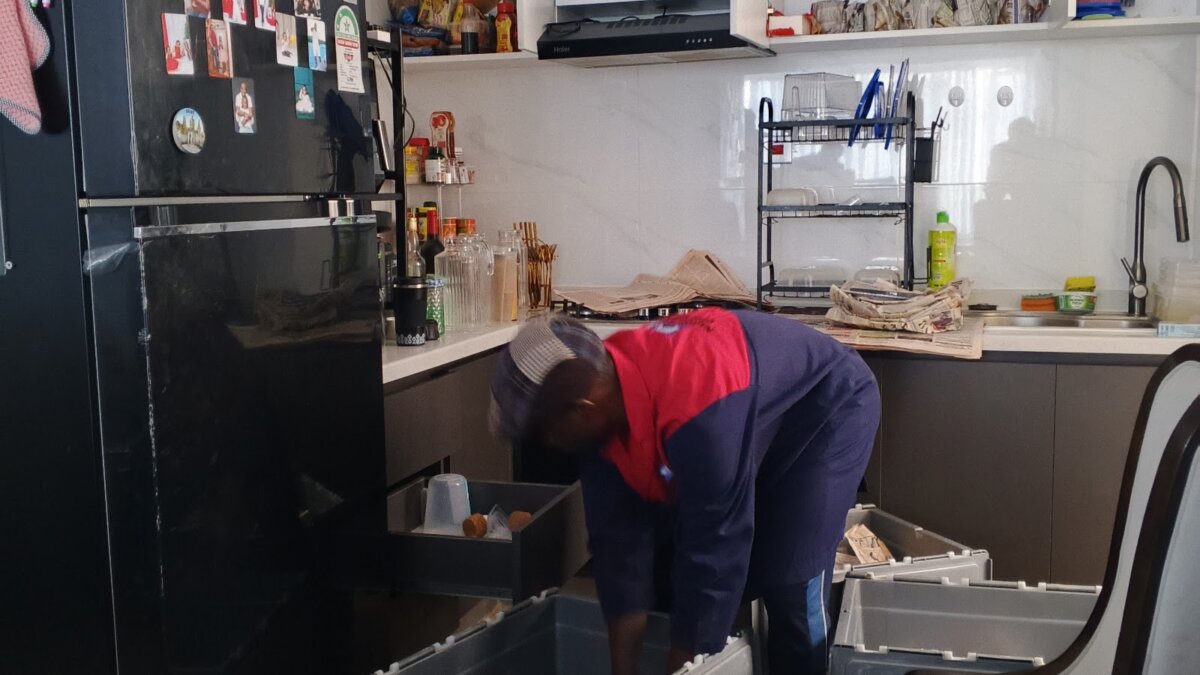
If you are short of time, a professional packing service packs your whole home in a day or two, using the right materials for every item, and then unpacks and sets up at the new home. It also means fragile items are packed by the people responsible for moving them. Our moving cost guide explains how packing affects the price, and the house moving checklist shows when to start packing each room.
When to start packing
Most people underestimate how long packing takes. A good rule is to start two to three weeks before moving day for a 1 or 2-bedroom home, and four weeks or more for a larger family house. Pack the things you use least first and work towards the things you use every day.
| When | What to pack |
|---|---|
| 3 to 4 weeks before | Books, out-of-season clothes, décor, spare bedding, items in the store |
| 2 weeks before | Spare kitchen items, guest room, children’s toys you can do without |
| 1 week before | Most of the kitchen, most clothes, bathroom cabinet extras |
| 2 to 3 days before | Remaining clothes, linen, most electronics |
| The day before | Final kitchen items, toiletries, bedding, your essentials box |
If you are using a professional packing service, the crew usually packs a typical home in a day, so you only need to sort and declutter in advance.
How many boxes will you need?
The number of boxes depends on how much you own, but these estimates are a useful starting point. Kitchens and books take the most boxes, so if you cook a lot or have a large library, add more.
| Home size | Small boxes | Medium boxes | Large boxes | Wardrobe boxes |
|---|---|---|---|---|
| Bedsitter or studio | 5 to 10 | 5 to 10 | 3 to 5 | 1 |
| 1-bedroom | 10 to 15 | 10 to 15 | 5 to 8 | 2 |
| 2-bedroom | 15 to 25 | 15 to 20 | 8 to 12 | 3 to 4 |
| 3-bedroom | 25 to 35 | 25 to 30 | 12 to 15 | 4 to 6 |
| 4-bedroom or larger | 35 or more | 30 or more | 15 or more | 6 or more |
Use small boxes for heavy things such as books, tins and tools, and large boxes for light things such as bedding, cushions and towels. A large box full of books is too heavy to carry safely and is likely to break.
Packing the kitchen
The kitchen takes longer to pack than any other room, because it is full of fragile and oddly shaped items.
- Plates: wrap each plate in paper and stand them on their edges in the box, like records, rather than stacking them flat. They are much less likely to crack.
- Glasses and cups: wrap each one individually, stuff the inside with paper and use a box with cardboard dividers if you can.
- Pots and pans: nest smaller pots inside larger ones, with paper between them, and pack lids separately.
- Knives: wrap blades in thick paper or cardboard and tape it closed, then label the bundle clearly.
- Small appliances: pack blenders, kettles and toasters in their original boxes if you still have them, or wrap them in towels.
- Food: use up perishables before the move, seal open packets, and do not pack liquids that could leak, such as cooking oil, unless the lids are taped.
Empty, defrost and dry the fridge and freezer at least a day before moving, so water does not leak onto other items in the truck.
Packing clothes, bedding and soft items
Clothes are easy to pack, and they make good padding for other things.
- Use wardrobe boxes for hanging clothes, so they arrive without creases.
- Fold other clothes into suitcases and bags, which can then be carried by hand.
- Leave clothes in chest drawers if the drawers are light and the mover agrees, and wrap the chest in stretch film so the drawers stay shut.
- Vacuum-pack bedding and duvets to save space.
- Use towels and blankets to wrap lamps, frames and other fragile items.
Packing electronics
Televisions, computers and sound systems need extra care. Take a photo of the cables at the back of each device before you unplug them, so you know how to reconnect them. Put cables, remotes and small parts in a labelled zip-lock bag and tape it to the device or keep it in the same box. Pack televisions in their original box if you have it, or wrap the screen in a blanket and stretch film, keep it upright and never put weight on the screen. Back up computers before the move, and carry laptops and hard drives with you rather than packing them on the truck.
Packing books, documents and paperwork
Books are heavy, so use small boxes and fill any gaps with paper so they do not shift. Pack books flat or upright with the spines against the side of the box. Keep important documents, such as passports, title deeds, certificates, medical records and school reports, in a separate folder or small box that travels with you, not on the truck.
Packing furniture
Large furniture is easier to move and less likely to be damaged if it is prepared properly.
- Dismantle beds, tables and large shelves, and put the screws and bolts in a labelled bag taped to the main piece.
- Remove glass shelves and tabletops and wrap them separately with thick padding and cardboard corners.
- Wrap wooden furniture in blankets or padding, then stretch film, so it does not get scratched.
- Cover sofas and mattresses with plastic covers to keep them clean and dry.
- Remove drawers from heavy chests, or tape them shut if they are light.
Packing the bathroom
Bathrooms are full of liquids, so the main risk is leaks. Throw away nearly empty bottles and old medicines before the move. Open each bottle, put a small piece of plastic wrap over the top and screw the lid back on, then pack the bottles upright in a plastic box or a sealed bag inside a carton. Keep prescription medicines, first aid items and the toiletries you need for the first night in your essentials bag. Towels and bath mats can be used as padding for other boxes.
Packing children’s rooms
Children cope better with a move when their own space is set up quickly. Let older children help pack their rooms and choose a few favourite toys and books to keep with them on moving day. Pack school uniforms, books and anything needed for the first school days in a clearly labelled box. Mark children’s boxes with their name as well as the room, so they can be unpacked first. Dismantle cots and bunk beds carefully, keep the fittings together and rebuild them before anything else on the first night.
Packing for storage
If some of your belongings are going into storage, pack them with more care than you would for a single journey, because they may stay in boxes for months. Use strong boxes of the same size so they stack safely, fill them completely so they do not collapse, and avoid plastic bags for clothes and bedding, which can trap moisture. Clean and dry appliances and furniture before storing them, and keep a list of what is in each box. Our guide to storage units in Nairobi has more on choosing and preparing for storage.
Packing plants, artwork and unusual items
Plants do not travel well on hot, long journeys. For local moves, water them a day or two before, put pots in boxes so they cannot tip, and move them last so they spend as little time in the truck as possible. Large framed pictures and mirrors should be wrapped in padding with cardboard corners, packed upright like plates rather than flat, and marked “Fragile” on both sides. Valuable artwork and antiques may need a custom crate. Our guide to moving house in Nairobi has more on preparing large and unusual items.
Common packing mistakes
- Starting too late. Rushed packing leads to broken items and lost belongings.
- Overfilling boxes. Heavy boxes break, injure people and slow down the move.
- Underfilling boxes. Half-empty boxes crush when other boxes are stacked on them, so fill gaps with paper or soft items.
- Using old or weak boxes. Supermarket boxes are free, but they are often too weak for heavy items.
- Not labelling the room. Unlabelled boxes end up in the wrong room and take hours to sort.
- Packing hazardous items. Gas cylinders, fuel, paint and chemicals should not go in the truck.
- Packing valuables on the truck. Keep cash, jewellery, documents and laptops with you.
Packing safely: protect yourself as well as your things
Packing involves a lot of lifting, bending and climbing. Lift boxes with your legs rather than your back, keep heavy boxes small, and ask for help with anything awkward. Use a stable ladder, not a chair, to reach high shelves and cupboards. Keep box cutters and scissors away from children, and clear walkways so nobody trips over boxes or rolls of tape. If you have back problems or a large amount to pack, it is worth leaving the heavy work to a professional crew who have the right equipment and training.
Packing on a budget
You do not need to spend a lot on materials. Use suitcases, laundry baskets, buckets and storage tubs as containers. Use towels, sheets, clothes and old newspapers for wrapping, although newspaper ink can mark white china, so wrap that in plain paper first. Ask your mover whether they hire reusable plastic crates, which are stronger than cardboard and are taken away after the move. Buy only the specialist materials you really need, such as bubble wrap for glass and wardrobe boxes for hanging clothes.
Unpacking in the new home
Unpack in a sensible order, so the house is usable quickly. Start with the essentials box, then beds and bedding, the bathroom, and the kitchen. Living rooms, books and décor can wait. Unpack one room at a time and finish it before starting the next, and flatten and stack empty boxes as you go. If you used a packing service, ask whether they can also unpack and take away the materials, which saves a lot of time in the first week. Our moving cost guide explains what packing and unpacking services usually include.
Frequently asked questions
Start decluttering two to three weeks before the move and packing about one to two weeks before. Pack the items you use least first and leave daily essentials until the last day.
Wrap each piece separately, stand plates on their edge, pack glasses upright, line and fill the box with paper or towels, and mark it as fragile.
Empty drawers that hold heavy or fragile items. Light items such as clothes can stay in drawers if the furniture is wrapped in stretch film to keep the drawers closed.
Use the original box if you have it. If not, wrap the screen in a blanket and bubble wrap, protect the corners, and move it standing upright.
Professional movers bring boxes, crates, bubble wrap, stretch film and padding. Check whether they are included in your quote.
Want us to pack for you?
Nairobi Movers offers full packing and unpacking with every house moving and office moving job, with all materials supplied. Call 0724 225 178 or WhatsApp us to book a free survey.