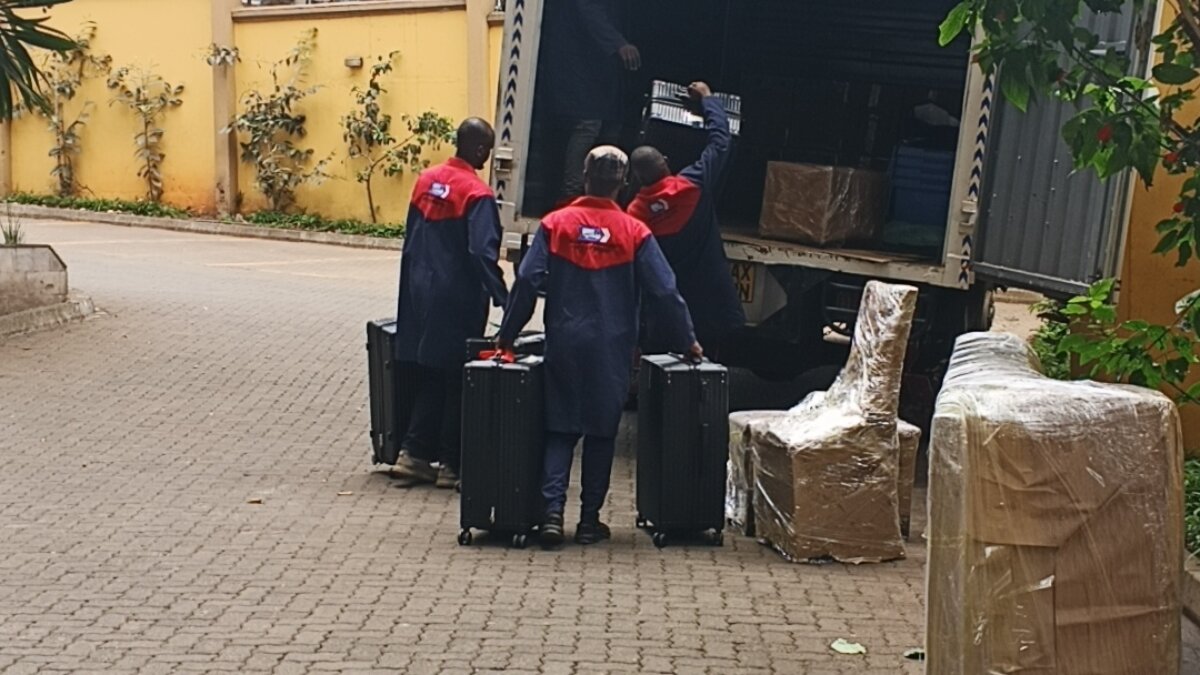
Kilimani is one of the most popular places to live in Nairobi. It sits close to the city centre, Upper Hill, Westlands and Lavington, it has shopping centres, hospitals, schools and restaurants within a short drive, and it offers everything from bedsitters to large family apartments. That popularity also makes it one of the busiest neighbourhoods for moving. Every month-end, trucks line up outside apartment blocks along Argwings Kodhek Road, Lenana Road, Kirichwa Road, Ralph Bunche Road and the many smaller streets in between.
Moving in Kilimani is different from moving in a leafy suburb with large compounds. Most homes are in apartment blocks, many of them high-rise, with lifts, caretakers, security desks, strict moving hours and limited parking. A move that is well planned around those rules is quick and calm. A move that ignores them can turn into a long day of waiting at the gate, carrying sofas down twelve flights of stairs and arguing with building management.
This guide explains how to plan a move in or out of Kilimani, what to ask your building before moving day, how to pack for an apartment move, and what to look for when you choose movers in Kilimani.
Why moving in Kilimani needs its own plan
Kilimani has changed a lot in the last two decades. Many of the old bungalows on large plots have been replaced by apartment blocks, and the area now has some of the densest residential development in Nairobi. That brings a few practical challenges that affect almost every move.
- Apartment living. Most moves involve lifts, stairwells, long corridors and basement or ground-floor parking. The distance from your door to the truck can be much longer than in a standalone house.
- Building rules. Many blocks only allow moves at certain times, ask for advance notice and require a gate pass or clearance from the landlord or management company.
- Limited parking. Visitor parking is often small, and a large truck may not fit through the gate or into the basement at all.
- Traffic. Roads such as Argwings Kodhek, Ngong Road, Valley Road and Lenana Road can be very slow at peak hours, which affects when the truck should arrive and leave.
- Month-end demand. Many leases in Kilimani start and end at month-end, so movers, lifts and loading bays are busiest in the last few days of the month.
None of these problems is difficult on its own. The key is to plan for them before moving day rather than discovering them when the truck is at the gate.
Step one: talk to your building management early
The single most useful thing you can do is speak to the caretaker or management office at both your current and your new building at least a week before the move. Ask them the following questions, and write down the answers.
- What days and times are moves allowed? Some buildings do not allow moves on Sundays or after a certain time in the evening.
- Do I need a gate pass, a clearance letter from the landlord, or a signed form from the management company?
- Can I book the lift, or a service lift, for the move? Is there a time limit?
- Where can the truck park, and is there a height limit at the gate or in the basement?
- Are there rules about protecting the lift, walls and floors?
- Is there a deposit or fee for using the lift or loading area?
- Who should the moving crew report to when they arrive?
Many buildings will not let anything leave the compound without written clearance, so confirm early that your rent is up to date and that the landlord or agent will issue the release on time. Forgetting the gate pass is one of the most common reasons a Kilimani move starts late.
Lifts, stairs and long carries
In an apartment move, the route between your door and the truck decides how long the move takes and how many people are needed. Walk the route before moving day and look for anything that could slow the crew down.
Lifts
If your building has a lift, measure the inside of the lift car and the door opening. Large sofas, wardrobes, beds and fridges may not fit, especially in older or smaller lifts. Ask whether there is a service lift and whether the lift can be held on your floor during the move. Ask the management whether you need to protect the lift walls with blankets or boards. If the lift is shared with other residents, try to move at a quieter time of day.
Stairs
If the lift is too small, out of order or not available, large items will go down the stairs. Measure the stairwell, especially at the turns, and tell your mover about any narrow points. Items that will not fit may need to be dismantled, and some furniture may need to be lifted over a balcony with ropes, which needs an experienced crew and the building’s permission.
Long carries
In many Kilimani blocks the truck cannot park right next to the entrance. If the crew has to carry items across a large parking area, down a ramp or along a corridor, the move will take longer. Mention this when you ask for a quote so the mover can plan the right number of people.
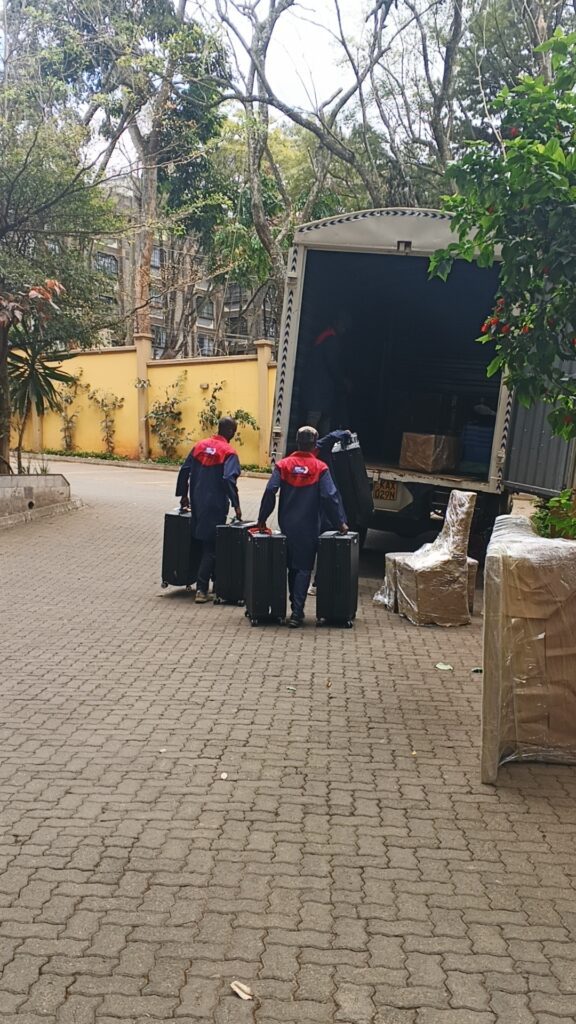
Parking and truck access
Parking can be the hardest part of a move in Kilimani. Before moving day, check where the truck will stand at both buildings.
- Measure the height of the gate and any basement entrance if the truck needs to drive in.
- Ask whether the truck can park in the compound or whether it must stay on the road.
- If the truck must park on the road, check whether there is a safe place to stop without blocking traffic or the entrance of a neighbouring building.
- Ask a neighbour or the caretaker to keep a space clear on the morning of the move.
- If access is very tight, ask your mover whether a smaller truck making two trips would work better than one large truck.
Tell your mover about access at both ends, not just the building you are leaving. A move from a ground-floor flat into a tenth-floor apartment with a small lift is a very different job from the reverse.
Choosing the best time to move in Kilimani
Timing can make a big difference in Kilimani because of traffic and building rules.
| Timing | What to expect |
|---|---|
| Early morning on a weekday | Quieter lifts and corridors, but heavy traffic on main roads from about 7 am |
| Mid-morning to early afternoon | Usually the best balance of light traffic and building access |
| Late afternoon and evening | Heavy traffic, and many buildings stop moves before dark |
| Saturday | Popular with residents, so lifts and parking are busier, but traffic is lighter |
| Sunday | Some buildings do not allow moves at all, so check first |
| Last three days of the month | Highest demand for movers and lifts; book well ahead |
| Mid-month | More flexible dates and easier bookings |
If your lease allows it, moving a few days before or after month-end can make the whole day easier. Our guide to the best time to move house in Nairobi explains how dates and seasons affect a move.
Packing for an apartment move
Apartment moves reward good packing. Boxes that are the right size, well sealed and clearly labelled are quicker to carry in lifts and up stairs, and they are less likely to be damaged on the way.
- Use strong boxes of similar sizes. They stack neatly in the lift and the truck, so fewer trips are needed.
- Keep boxes light enough to carry. Heavy items such as books, tins and tools go in small boxes.
- Wrap furniture well. Corridors, door frames and lifts are tight, so furniture is more likely to be knocked. Blankets, padding and stretch film protect both your furniture and the building.
- Dismantle large items. Beds, dining tables, shelves and some wardrobes are easier to move in pieces. Keep screws and fittings in labelled bags.
- Label every box with the room. In the new apartment, the crew can place each box in the right room without asking.
- Protect floors. Many Kilimani apartments have tiles or wooden floors that mark easily. Ask your mover whether they protect floors and doorways.
If you want to pack some of your home yourself, you can buy boxes, bubble wrap, packing tape and wrapping paper from our packing materials shop. For detailed advice on each room, read our packing tips for moving house.
Moving within Kilimani or to a nearby area
Many people who move in Kilimani are not going far. They may be moving to a bigger apartment on the next street, or to nearby areas such as Kileleshwa, Lavington, Hurlingham, Yaya, Westlands or Upper Hill. A short move still needs the same preparation as a long one, because most of the work happens at the two buildings rather than on the road.
For a short move, it can be tempting to make several trips with a small vehicle or to ask friends to help. This often takes longer than expected, especially in traffic, and it puts your furniture and the building at risk. A professional crew with the right truck and equipment can usually complete a short Kilimani move in a single, well-organised day.
If you are moving further, for example to Karen, Runda, Kitengela or Ruiru, plan for longer travel time and confirm the access rules at the new home as early as you would for your current building.
Moving into Kilimani from another part of Nairobi
If you are new to Kilimani, there are a few extra things to check before you move in.
- Water supply. Ask how water is supplied, whether the building has a borehole or storage tanks, and how often supply is interrupted.
- Electricity. Check the type of KPLC meter, take a reading on the day you move in and find out whether the building has a backup generator.
- Internet. Ask which providers serve the building and book an installation before you move.
- Service charge. Many apartment blocks charge a monthly service charge for security, cleaning and shared utilities. Confirm the amount and what it covers.
- Building rules. Ask about rules on noise, pets, renovations, rubbish collection and visitors.
- Security. Register with the security desk and find out how visitors and deliveries are handled.
Our guide to the best neighbourhoods in Nairobi compares Kilimani with other popular areas if you are still deciding where to live.
What a professional move in Kilimani looks like
A well-run apartment move follows a clear sequence. Knowing what to expect helps you plan your own day.
Before moving day
The mover surveys your home, either in person or by video, and asks about the lift, stairs, parking and building rules. You receive a written quote that lists the crew, truck, materials and services. You confirm the date, book the lift and arrange the gate pass. If you have chosen a packing service, the crew may pack on the day before the move or early on moving day.
On moving day
The crew arrives at the agreed time and the supervisor walks through the apartment with you. Floors and doorways are protected, furniture is wrapped and dismantled where needed, and boxes are carried to the truck in a planned order. Heavy items go in first and fragile items are packed securely. Before the truck leaves, you check every room, cupboard, balcony and store.
At the new apartment
The crew unloads in the reverse order, places each box and piece of furniture in the right room, rebuilds beds and large furniture, and removes packing waste if this is agreed. You check the inventory and note any problems before the crew leaves.
How to choose movers in Kilimani
There are many moving companies in Nairobi, and choosing the right one makes the biggest difference to how your move goes. When you compare movers for a Kilimani apartment move, look for the following.
- Experience with apartment moves. Ask how they handle lifts, stairs and building rules, and whether they protect floors and walls.
- A proper survey. A good mover wants to know what you are moving and how access works before giving a firm price.
- A written quote. The quote should list everything included, so there are no surprises on the day.
- The right truck. Ask whether the truck will fit the gate and parking at both buildings, and whether it is a closed truck to protect your goods from rain and dust.
- Enough crew. Apartment moves involve long carries, so the crew size matters.
- Insurance. Ask what cover applies to your goods during the move and what the limits are.
- Reviews and recommendations. Read recent Google reviews and ask neighbours which movers they used.
Our guide to choosing the best movers in Nairobi has a full checklist and a list of questions to ask.
How much does it cost to move in Kilimani?
The cost of a move in Kilimani depends on the size of your home, the amount you own, the floor you live on, lift and stair access, the distance to your new home, the services you choose and the date. A move from a high floor with no suitable lift takes more time and more people than a move from a ground-floor flat, and a month-end move is in higher demand than a mid-month move.
The best way to get an accurate price is to request a survey and a written quote. Our moving cost guide explains the main factors that affect the price of a move in Nairobi, and you can request a free quote for your own move.
Moving an office or business in Kilimani
Kilimani is not only residential. Many businesses, clinics, consultancies and small offices are based in converted houses and commercial buildings across the area. Office moves in Kilimani face the same challenges as apartment moves, with the added need to keep the business running. Plan office moves over a weekend or after hours, confirm access with the building, back up data and label every desk and computer. Our office moving services page and office relocation checklist explain how to plan a business move.
Storage between apartments
Sometimes the dates do not line up. Your old lease ends before the new apartment is ready, or you are moving into a smaller flat and need somewhere to keep furniture for a while. In these cases, short-term storage can bridge the gap. Ask your mover whether they can collect your goods, store them securely and deliver them to the new apartment when it is ready. Our storage services page and guide to storage units in Nairobi explain the options.
A simple Kilimani moving checklist
Use this short checklist to keep your move on track.
| When | What to do |
|---|---|
| 3 to 4 weeks before | Give notice, request quotes and book your mover |
| 2 weeks before | Confirm moving hours, lift booking and gate pass at both buildings |
| 1 week before | Declutter, start packing, arrange internet at the new apartment |
| 2 to 3 days before | Pack most rooms, defrost the fridge, confirm parking for the truck |
| The day before | Pack an essentials bag, confirm the arrival time with the mover |
| Moving day | Meet the crew, walk through the apartment, check every room before leaving |
| After the move | Check the inventory, settle final bills and update your address |
For a complete list of everything to do before and after a move, see our house moving checklist for Nairobi.
Common mistakes on Kilimani moves
- Not booking the lift. If another resident is moving on the same day, you may have to wait.
- Forgetting the gate pass. Security will not let the truck leave without clearance.
- Booking too large a truck. A truck that cannot enter the compound means longer carries and more time.
- Leaving packing to the last minute. Unpacked items slow the crew down and are more likely to be damaged.
- Not measuring large furniture. A sofa that does not fit the lift or the new door can stop the move.
- Moving at peak traffic times. A short distance can take a long time on Ngong Road or Argwings Kodhek at rush hour.
Related moving guides
- House moving services in Nairobi
- House moving checklist for Nairobi
- Packing tips for moving house
- Same-day movers in Nairobi
- Why most moves in Nairobi go wrong
Planning your move in Kilimani
A move in Kilimani is mostly about access: lifts, stairs, gates, parking and building rules. Speak to both buildings early, choose the right day and time, pack well, and choose a mover with real experience of apartment moves. If you plan around these points, a Kilimani move can be done in a single, calm day, and you can enjoy your new home from the first night.
At Nairobi Movers, we handle house and apartment moves across Kilimani and the rest of Nairobi, including packing, furniture wrapping, dismantling and storage. Tell us about your building and your move, and we will give you a clear written quote.
Frequently asked questions
Book at least two weeks ahead for a normal apartment move, and three to four weeks ahead if you are moving at month-end, when demand for movers and lifts is highest.
Most apartment blocks in Kilimani require written clearance from the landlord, agent or management company before goods can leave the compound. Ask the caretaker what is needed at least a week before the move.
Measure the lift and large furniture before moving day. Items that do not fit can be dismantled, carried down the stairs or, with the building’s permission, lifted over a balcony by an experienced crew.
A weekday mid-morning outside the last few days of the month is usually easiest, with lighter traffic and quieter lifts. Check whether your building allows moves on weekends.
Most one to three-bedroom apartment moves within Nairobi are completed in a single day. Lifts, stairs, long carries and packing services can add time, so share these details when you request a quote.
Yes. Short-term storage lets you move out on time and have your goods delivered when the new apartment is ready. Ask your mover about collection, storage and delivery.
Get a quote for your Kilimani move
Tell us your current and new address, the floor, lift access and the size of your home, and we will plan the right crew and truck for your move.
📞 Call us: 0724 225 178
📝 Request a quote: nairobimovers.com/contact-us